
During Diwali, a son in Pune called YORO while arranging his father’s return from hospital. He needed a caretaker at home and help arranging a hospital bed.
Staffing was difficult that day. We checked availability before confirming support and were able to arrange a caregiver.
It was a practical problem with a lot of worry behind it: who would be there when his father came home?
For families arranging home care after hospital discharge in Pune, that question is worth answering before the bags are packed.
The gap between discharge and getting home
The hospital’s discharge instructions and the family’s home arrangements need to meet. The treatment plan may be clear while the first shift, equipment delivery or overnight contact is still unresolved.
Festivals can make availability harder to confirm. But the same questions matter on an ordinary Tuesday. Start discussing home support as soon as the treating team mentions discharge, and include your parent in the plan.
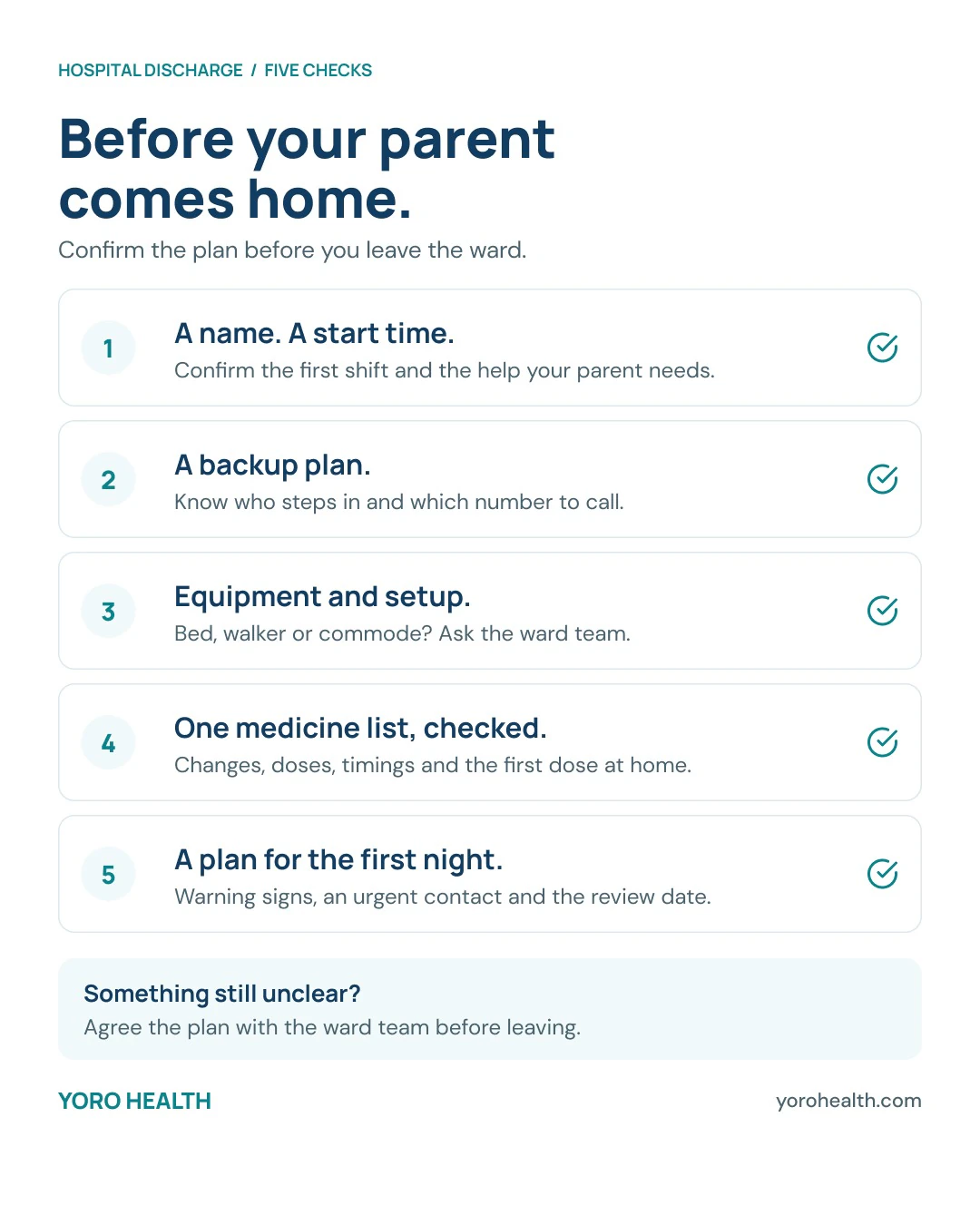
Five things to confirm before leaving the hospital
1. A name and a start time for the first shift
Ask who is coming, when they start and what help they can provide. Confirm the address, access instructions and who will brief them on arrival.
Ask the ward team whether your parent needs help with everyday activities, nursing care, or both. A caregiver booking should not be treated as confirmation that prescribed clinical tasks are covered; arrange the appropriately qualified professional for those tasks.
2. A backup plan if that person cannot come
Save the provider’s coordination number. Ask who arranges a replacement, how you will be told and how the replacement will receive the handover.
Make sure the family knows what to do if there is a gap. An unconfirmed replacement is still an unresolved part of the plan.
3. The right equipment, ready at home
Ask the ward team what your parent actually needs: a hospital bed, walker, commode chair or other support. Equipment should follow that assessment.
If something is needed, confirm delivery and setup before arrival. Ask for a demonstration of safe use. Also discuss getting your parent from the hospital into the home, including stairs and the journey to the bathroom.
4. One medicine list, checked with the team
Ask for a written list showing names, doses and timings, including medicines that have been started, changed or stopped. Confirm when the first dose at home is due, taking account of the last hospital dose.
Get the prescribed medicines ready and give the list to the person helping at home. Resolve any mismatch with an older prescription before leaving; do not guess which list to follow.
5. A plan for the first night and the first review
Who will be with your parent overnight? Which number should you call for a care-coordination problem, and which for an urgent medical concern?
Ask the treating team to write down the warning signs that need urgent action and what to do if they occur. Confirm the follow-up date and transport. A WhatsApp enquiry to a care provider is not an emergency response plan.
If anything is unresolved, tell the ward team before leaving and agree a safe plan together. Do not assume that a few extra hours alone will solve the gap. Use the treating team’s written instructions for your parent’s specific needs.
What YORO brings to the arrangement
YORO works with a salaried care team based in the neighbourhoods it serves. We aim for continuity wherever possible, with a handover when someone else covers a visit.
Festivals and busy days still require planning. Share the likely discharge date, your address, the support advised by the hospital and the hours needed as early as possible. Ask our team to confirm availability, the care professional, the start time and charges before relying on the booking.
Explore daily care at home or nursing care.
Message YORO on WhatsApp · Download the app for Android or iPhone.
Quick questions
How soon should I arrange home care before discharge?
Start when the treating team first discusses discharge. Complex care, equipment or longer shifts may need more lead time. Confirm the arrangements before leaving.
Do we need a hospital bed at home?
Not always. Ask the treating team what is needed for your parent’s mobility, positioning and care. Do not decide from another family’s experience.
What should the caregiver know on the first day?
The agreed tasks, your parent’s preferences, mobility and food instructions, the current medicine list, important contacts, warning signs and the next review date. Make sure they understand the handover.
Related reading: Where the price of a care hour goes.
Further reading: MedlinePlus: planning your discharge and AHRQ: a guide for leaving hospital.